
AI & Business Transformation
AI Transformation Readiness: A Diagnostic Framework Before Enterprise Deployment
A practical pre-deployment framework for assessing business value, data, controls, technology, governance, and regulatory readiness before scaling AI across the enterprise.
Key takeaways
- Start with business problems and decision rights—not with a model or vendor.
- Score data, process, control, technology, people, and regulatory readiness before committing to scale.
- Separate low-consequence productivity use cases from AI that can influence accounting, customer outcomes, compliance, or external reporting.
- Design governance, human review, traceability, and exception handling before production deployment.
Why readiness matters before deployment
AI transformation can create real operating leverage, but the gap between experimentation and durable enterprise value is usually a governance and operating-model problem rather than a model-selection problem. McKinsey’s early-2024 global survey reported that 72% of respondents said their organizations had adopted AI in at least one business function, up from 55% in the prior survey; 65% reported regular use of generative AI in at least one function. The speed of adoption increases the importance of disciplined front-end diagnosis.
Source: McKinsey Global Survey on AI, conducted February 22–March 5, 2024. The State of AI in Early 2024. Survey measures are respondent-reported and should not be interpreted as audited market statistics.
A six-part readiness diagnostic
A useful diagnostic tests whether the organization can move from a compelling use case to controlled operation. The six dimensions below should be assessed together because weak readiness in one dimension can undermine the others.
1
Business value
Use-case economics, decision impact, measurable outcome, process owner.
2
Data readiness
Availability, lineage, privacy, quality, retention, access rights.
3
Process & controls
Human review, approvals, exceptions, evidence, downstream dependencies.
4
Technology
Architecture, integration, security, monitoring, change management.
5
People & accountability
Model owner, process owner, risk owner, training, escalation.
6
Governance & regulation
Risk classification, policy, vendor oversight, jurisdictional requirements.
1. Business-value diagnosis: define the decision before the technology
The diagnostic should begin with the decision or workflow the organization wants to improve. “Deploy generative AI in finance” is not a use case. “Reduce manual contract review time while preserving accounting-review sign-off” is. For each candidate use case, management should define the baseline cost, cycle time, error rate, expected benefit, consequence of a wrong output, and the person who retains decision authority.
A useful portfolio lens separates productivity tools from consequential decision systems. Drafting meeting notes is materially different from proposing journal entries, determining revenue classifications, screening customers, generating forecasts used in external guidance, or scoring employees. The higher the consequence, the stronger the validation, monitoring, human review, and documentation should be.
2. Data readiness: AI cannot outrun weak source information
Before a pilot begins, teams should map the source data, ownership, refresh frequency, permitted use, quality checks, and sensitive-data restrictions. In finance, that map often crosses ERP, CRM, contract repositories, payroll, expense, equity administration, tax, planning systems, and spreadsheets. Where retrieval-augmented generation is used, the organization should also understand which documents are authoritative and how outdated or conflicting content is handled.
Data lineage matters for auditability. If an AI-generated output becomes part of a financial estimate, control, or management report, reviewers should be able to identify the relevant source information and key assumptions rather than rely on a black-box answer.
3. Control design: create a path from AI output to accountable decision
A controlled workflow should specify when AI may be used, what inputs are permitted, who reviews the output, what evidence is retained, how exceptions are escalated, and when the model must not be used. For higher-risk finance applications, approval thresholds and independent review should be explicit.
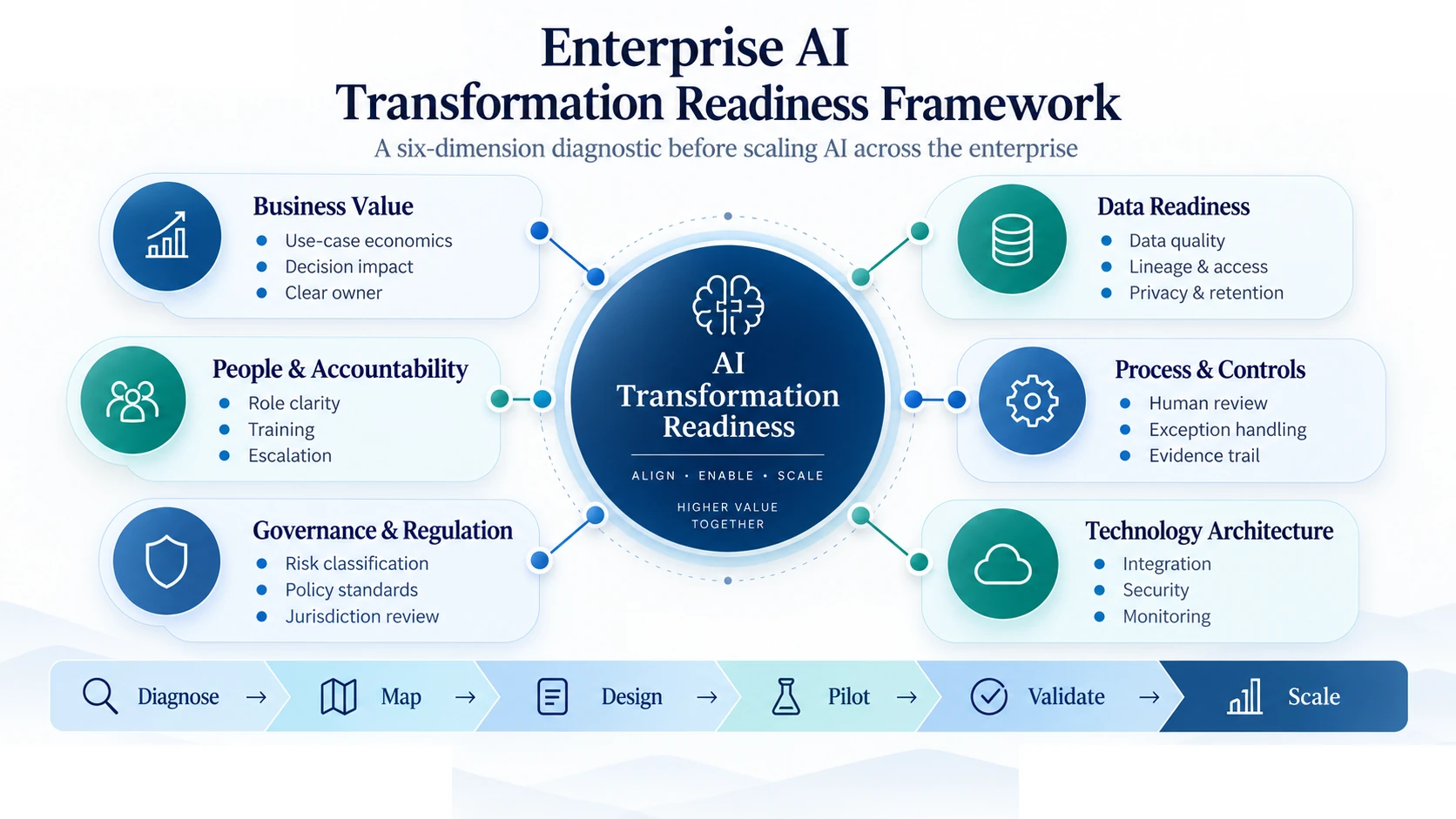
Figure 2. Enterprise AI transformation readiness framework
A practical readiness model linking business value, data foundations, control design, technology capability, governance, and regulatory considerations before broader deployment.
4. Governance framework: use established risk concepts
NIST’s AI Risk Management Framework 1.0 organizes AI risk activities around Govern, Map, Measure, and Manage. Its July 2024 Generative AI Profile adds risk-management considerations specific to generative AI. These frameworks are voluntary, but they provide a practical vocabulary for risk ownership, trustworthiness, testing, monitoring, and lifecycle governance.
For multinational organizations, regulation may also affect readiness design. The EU AI Act entered into force on August 1, 2024 and uses a risk-based regulatory structure. Even when a specific use case is not high-risk, the existence of cross-border data, employees, customers, vendors, or AI providers can make jurisdictional screening an important part of the diagnostic.
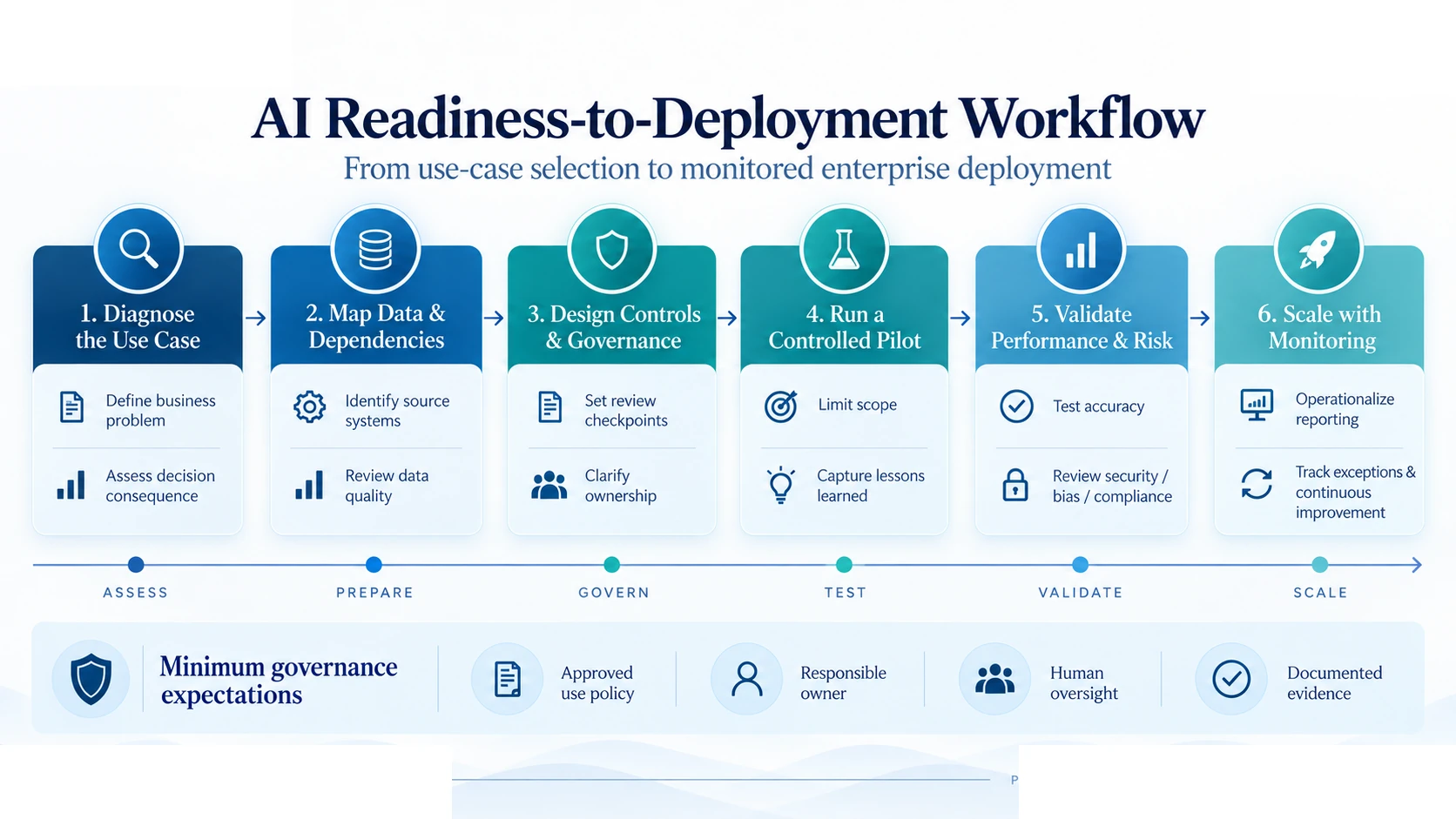
Figure 3. From AI insight to controlled deployment
Illustrative governance workflow showing how organizations can move from opportunity identification to policy-setting, pilot testing, deployment approval, monitoring, and iterative improvement while preserving accountability.
5. A practical readiness scorecard
Management can use a simple 1–5 scoring model to decide whether a use case should move into pilot, remain in remediation, or be deferred. The score is not a compliance conclusion; it is a prioritization tool.
| Dimension | 1 — Not ready | 3 — Partially ready | 5 — Ready to pilot |
|---|---|---|---|
| Business case | No measurable baseline | Benefit identified, owner unclear | Baseline, KPI, owner and decision rights defined |
| Data | Uncontrolled sources | Some lineage and quality checks | Approved sources, lineage, quality and privacy controls |
| Controls | No human review | Manual review but limited evidence | Documented review, exception and evidence model |
| Governance | No policy or owner | Draft policy | Approved risk classification, owner and monitoring |
Management action plan
A disciplined AI program can start small: inventory current employee AI use, define prohibited and permitted data, rank candidate use cases by value and consequence, establish a minimum governance standard, select one or two controlled pilots, document evaluation metrics, and define conditions for scale. The purpose of the diagnostic is not to slow AI adoption; it is to reduce expensive rework and create a foundation that can support broader deployment.
Policy & technical references
Voluntary framework for managing AI risks and trustworthiness.
NIST Generative AI ProfileJuly 2024 profile addressing generative-AI-specific risks.
EU AI ActRisk-based regulatory framework that entered into force August 1, 2024.
McKinsey State of AI 2024Survey source for the adoption data used above.
Important note
This publication is for general informational purposes only and does not constitute accounting, legal, tax, audit, investment, valuation, transaction, or other professional advice. The appropriate analysis depends on the specific facts and circumstances and on authoritative guidance in effect at the relevant date.
Turn insight into action
Complex finance, control, transaction, and technology questions benefit from structured analysis, disciplined data, and clear ownership.
Contact Insight Bridge