
Stock Compensation
Employee Equity Compensation at U.S. Public Companies: Accounting Across Common ASC 718 Scenarios
A detailed analysis of stock options, RSUs, PSUs, liability awards, modifications, spring-loaded grants, taxes, EPS, and common public-company control issues under ASC 718.
Key takeaways
- ASC 718 accounting begins with scope, award classification, grant-date determination, and the nature of vesting conditions.
- Service, performance, and market conditions can produce very different recognition patterns even when the legal award looks similar.
- Equity-classified awards generally use grant-date fair value; liability-classified awards are remeasured through settlement.
- Modifications, IPO transitions, tax effects, EPS, executive-compensation disclosures, and grants made around material nonpublic information can create additional complexity.
Why employee equity awards become a financial-reporting system, not a single journal entry
U.S. public companies use stock options, restricted stock units (RSUs), performance stock units (PSUs), employee stock purchase plans (ESPPs), stock appreciation rights (SARs), and other awards to align employees with shareholder outcomes. Under ASC 718, the accounting is driven by the award’s substantive terms—not simply its label. The accounting model interacts with valuation, payroll, income taxes, EPS, proxy disclosure, controls, and, for public companies, SEC staff guidance.
The SEC’s Staff Accounting Bulletin No. 120 emphasizes that Topic 718 is based on recognizing compensation cost at fair value and highlights valuation considerations for “spring-loaded” awards granted when the company possesses material nonpublic information.
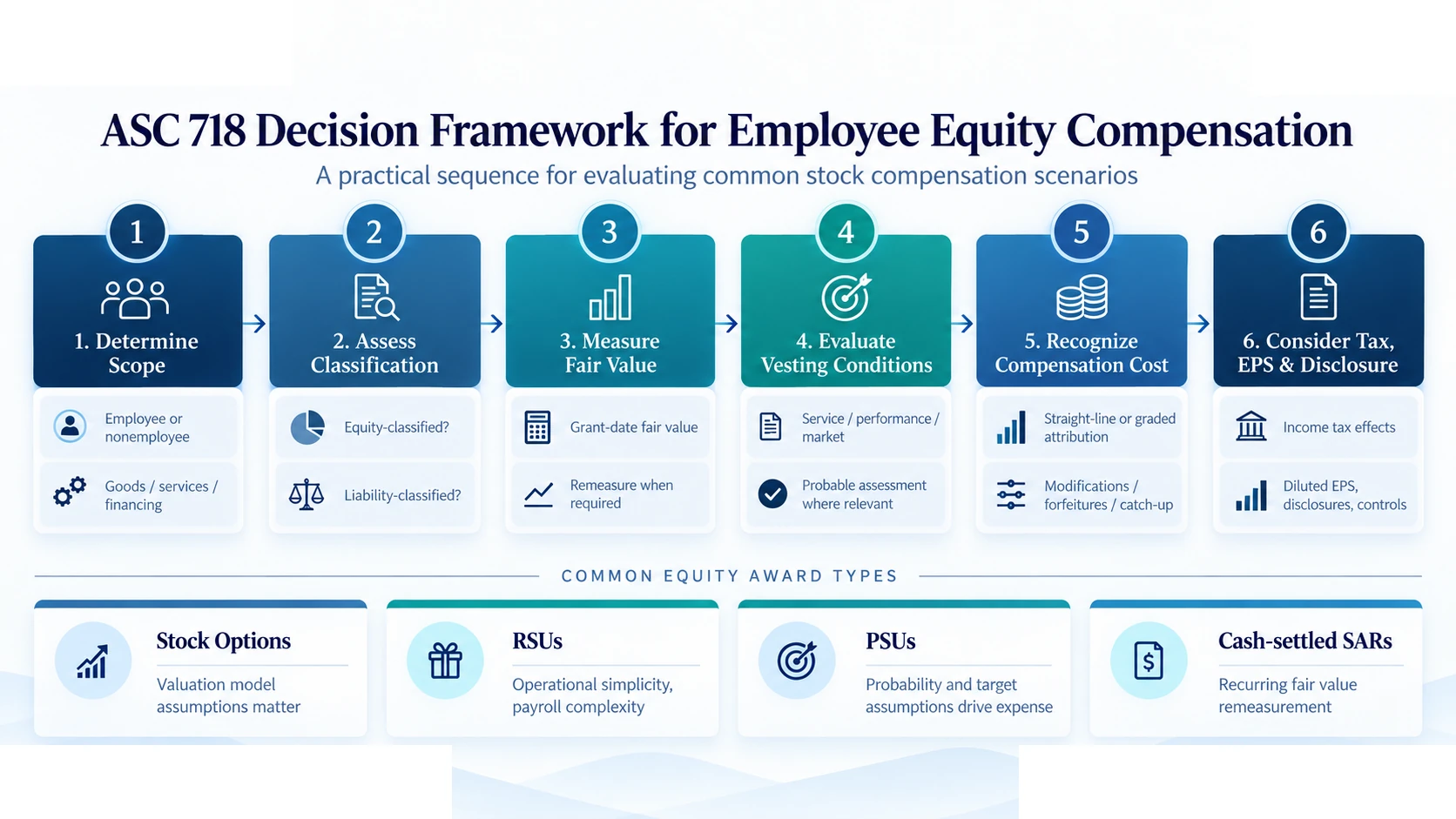
Figure 1. A practical ASC 718 decision framework
A structured view of the accounting sequence from scope and classification to measurement, recognition, modification analysis, and downstream tax, EPS, disclosure, and control considerations.
1. Stock options with a service condition
Example. A public company grants 100,000 employee stock options on March 1, with an exercise price equal to the market price, a four-year service vesting period, and grant-date fair value of $4.50 per option. Assuming equity classification, total grant-date compensation cost is $450,000. If the company recognizes forfeitures as they occur and no forfeitures occur, straight-line attribution over four years would generally produce $112,500 of annual compensation cost, subject to the award’s vesting pattern and the entity’s attribution policy.
Valuation assumptions typically include expected volatility, expected term, risk-free rate, dividends and current share price. Public-company status can change the availability of market-based inputs, especially expected volatility. Controls should address the completeness of grants, approval date, employee population, model assumptions, and reconciliation between the equity administration platform and the general ledger.
2. RSUs: legally simple, operationally sensitive
Example. A company grants 50,000 RSUs when its common shares trade at $20. If the awards are equity-classified and vest solely based on four years of service, the initial compensation cost is approximately $1.0 million before considering dividends or other award-specific terms. The accounting may be simpler than an option valuation, but tax withholding, settlement mechanics, forfeitures, award modifications, and payroll interfaces can still create control risk.
For public companies, settlement often involves share withholding for payroll taxes. The award terms and withholding practices should be reviewed against Topic 718 classification guidance; changes introduced by ASU 2016-09 permit withholding up to the maximum individual statutory tax rate without automatically forcing liability classification when the relevant conditions are met.
3. Performance awards: probability can drive expense
For a performance condition that is not a market condition, compensation cost is generally recognized when achievement of the performance condition is probable, based on the number of awards expected to vest. If the estimate changes, cumulative compensation cost is adjusted.
Example. An executive receives a target award of 100,000 PSUs with grant-date fair value of $15 per unit. The plan allows payout from 0% to 150% based on revenue and EBITDA targets. If management concludes that 150% achievement becomes probable halfway through the performance period, the compensation model must catch up to the amount attributable to 150,000 units, rather than continuing to recognize expense at the original target level.
A market condition, such as relative total shareholder return, follows a different model: the market condition is incorporated into grant-date fair value, often through a Monte Carlo simulation. If the employee satisfies the requisite service period, compensation cost is not reversed merely because the market target is missed.
4. Liability-classified awards: fair value keeps moving
Cash-settled SARs and other liability-classified awards are remeasured at fair value each reporting date until settlement. This can create earnings volatility that does not exist for a comparable equity-classified award.
Example. A liability award has fair value of $300,000 at year-end one and $520,000 at year-end two as the share price rises. If the requisite service is substantially complete, the cumulative compensation liability and expense move toward the higher fair value. Finance teams therefore need a recurring valuation process, not a one-time grant-date model.
5. Modifications, cancellations, and repricings
A modification can create incremental compensation cost when the fair value of the modified award exceeds the fair value immediately before modification. Companies should identify whether a change to exercise price, vesting, settlement method, performance target, post-termination exercise period, or other term constitutes a modification under ASC 718.
A common control failure is treating compensation-committee approval as sufficient accounting documentation. Finance should receive the executed amendment, understand the legal effective date, identify affected employees, calculate incremental fair value where required, and document the accounting conclusion.
6. Nonemployee awards and the boundary of Topic 718
ASU 2018-07 expanded Topic 718 to cover most share-based payments to nonemployees for goods and services used or consumed in the grantor’s operations. The guidance does not turn every issuance of equity to a third party into compensation accounting: awards that are financing in substance or consideration payable to customers may fall under other guidance.
7. Spring-loaded awards and material nonpublic information
SEC SAB 120 calls for particular scrutiny when a company grants options shortly before releasing material positive information. The SEC staff’s view is that the current share-price input used in valuation should reflect the economics of material nonpublic information in circumstances where the observable market price does not. Governance should therefore connect compensation grants with legal, finance, and disclosure processes rather than treating the grant calendar as isolated.
8. Income taxes, cash flow, and EPS
Stock compensation also creates downstream accounting. ASU 2016-09 simplified several areas, including the recognition of excess tax benefits and deficiencies in income tax expense and the cash-flow classification of certain tax-related items. Diluted EPS may require treasury-stock-method calculations for options and unvested awards, while performance awards may enter diluted EPS based on the applicable contingently issuable share guidance.
These calculations should reconcile to the same award population used for ASC 718 expense. Differences between equity administration, payroll, tax, EPS and proxy-reporting populations are a common source of avoidable errors.
Worked comparison of common awards
| Award | Typical measurement | Key recognition issue | Recurring risk |
|---|---|---|---|
| Stock option | Grant-date fair value if equity-classified | Service / performance vesting | Valuation assumptions; modifications |
| RSU | Typically share price-based FV | Service period; forfeitures | Settlement and payroll withholding |
| PSU | Depends on condition type | Probability or market-condition model | Cumulative catch-up; data integrity |
| Cash SAR | Remeasured fair value | Expense changes through settlement | Quarterly valuation volatility |
Authoritative references
The FASB Codification is the authoritative source of nongovernmental U.S. GAAP.
SEC SAB 120SEC staff guidance on Topic 718 and spring-loaded awards.
ASU 2016-09Employee share-based payment simplifications affecting tax, classification and cash flows.
ASU 2018-07Expanded Topic 718 to most nonemployee awards for goods and services.
Important note
This publication is for general informational purposes only and does not constitute accounting, legal, tax, audit, investment, valuation, transaction, or other professional advice. The appropriate analysis depends on the specific facts and circumstances and on authoritative guidance in effect at the relevant date.
Turn insight into action
Complex finance, control, transaction, and technology questions benefit from structured analysis, disciplined data, and clear ownership.
Contact Insight Bridge