
Financial Due Diligence
Financial Due Diligence in High-Technology Companies: Where Deal Value Can Hide—or Erode
A data-driven diligence framework for revenue quality, recurring metrics, retention, cloud economics, stock compensation, R&D, cybersecurity, and transaction normalization in technology deals.
Key takeaways
- Start with revenue quality and cohort economics, then reconcile operating metrics back to GAAP.
- Separate growth generated by durable recurring activity from growth created by billing timing, one-time services, acquisitions, or aggressive metric definitions.
- In high-tech targets, stock compensation, R&D, software development, cloud commitments, cybersecurity, and customer concentration can materially change normalized economics.
- Data integrity is itself a diligence finding: if ARR, NRR, bookings, pipeline, churn, and customer cohorts cannot be reproduced, valuation confidence should fall.
The diligence question is not “How fast is the company growing?” but “What is the quality of that growth?”
Technology-company financial due diligence is often metric-heavy because the income statement alone may not explain the economics of recurring revenue, customer acquisition, retention, cloud infrastructure, stock compensation, product development, and deferred revenue. A strong diligence process therefore reconciles operational KPIs to accounting records and then asks whether reported growth is repeatable, cash-generative, and supported by controlled data.
| Metric | 2022 | 2023 | 2024 |
|---|---|---|---|
| ARR ($m) | 20 | 27 | 32 |
| Net revenue retention | 120% | 112% | 103% |
| Gross margin | 71% | 74% | 76% |
| Top-10 customer concentration | 28% | 34% | 41% |
| Stock compensation / revenue | 12% | 16% | 21% |
Illustrative diligence example only; not data from a specific company. The purpose is to show why top-line growth should be evaluated alongside retention, concentration and cost quality.
1. Revenue quality: reconcile contracts, billing, revenue, ARR, and cash
For SaaS and subscription businesses, diligence should connect contract terms to ASC 606 conclusions and then reconcile billing-system data to the general ledger. Key questions include whether implementation or professional services are distinct, whether variable consideration is constrained, whether usage-based fees are included appropriately, how contract modifications are treated, and whether principal-versus-agent conclusions are supportable.
ARR and bookings are operational measures, not substitutes for GAAP revenue. Diligence should define each metric, identify exclusions, test a sample back to executed contracts, and reconcile the movement in deferred revenue and unbilled receivables. For public-company targets or exit planning, SEC non-GAAP guidance is also relevant because internally popular metrics can become investor-facing measures later.
2. Retention and cohort economics
Headline growth can conceal deterioration in the installed base. Cohort analysis should distinguish new-logo growth from expansion of existing customers and from price increases. Net revenue retention should be reconstructed from customer-level recurring revenue rather than accepted from a dashboard if the underlying logic cannot be reproduced.
A falling NRR combined with rising customer concentration can signal that growth is becoming more dependent on a smaller number of large accounts. Diligence should examine churn reasons, contract renewal rights, discounting, sales incentives, and whether expansion is driven by genuine adoption or short-term commercial concessions.
3. Gross margin and cloud economics
Technology-company gross margin can be distorted by inconsistent classification of hosting, customer support, implementation personnel, data costs, and third-party software. Diligence should normalize classification and analyze unit economics by product, customer tier, or deployment model. Cloud commitments and minimum-spend arrangements can create future cost exposure even when current gross margin appears strong.
4. Stock compensation: normalized EBITDA can be a valuation debate
Stock-based compensation is a recurring and economically significant cost for many high-tech companies. Buyers often analyze both GAAP results and adjusted measures, but the treatment should be explicit. SEC non-GAAP interpretations caution against adjustments that make measures misleading and require appropriate prominence and reconciliation when public disclosure rules apply.
Diligence should also inspect unrecognized compensation cost, vesting schedules, performance awards, change-in-control provisions, acceleration, option exercise prices, tax withholding, and the potential dilution of outstanding awards. A transaction may trigger modification accounting or affect the probability assessment for performance conditions.
5. R&D and software development: understand what is expensed, capitalized, and deferred
The accounting for technology development depends on the nature of the software and the applicable U.S. GAAP model. Internal-use software, software to be sold or marketed, cloud implementation costs, and general research and development can have different recognition thresholds. A diligence team should map engineering payroll and vendor spend to the accounting policy and test whether capitalization begins and ends at the appropriate development stages.
Aggressive capitalization can improve current-period EBITDA while moving costs to future amortization. Conversely, a conservative expense policy may depress near-term earnings but reduce balance-sheet risk. The key is consistency with the applicable guidance and a clear normalization view for valuation.
6. Cybersecurity, data privacy, and hidden financial exposure
Cybersecurity is not only an IT diligence topic. A material incident can affect revenue, customer retention, insurance recoveries, litigation, disclosure obligations, and deal terms. The SEC’s 2023 cybersecurity rules require public companies to disclose material cybersecurity incidents and provide annual disclosures about cybersecurity risk management, strategy, and governance. A buyer should therefore understand historical incidents, unresolved vulnerabilities, remediation costs, insurance coverage, and governance.
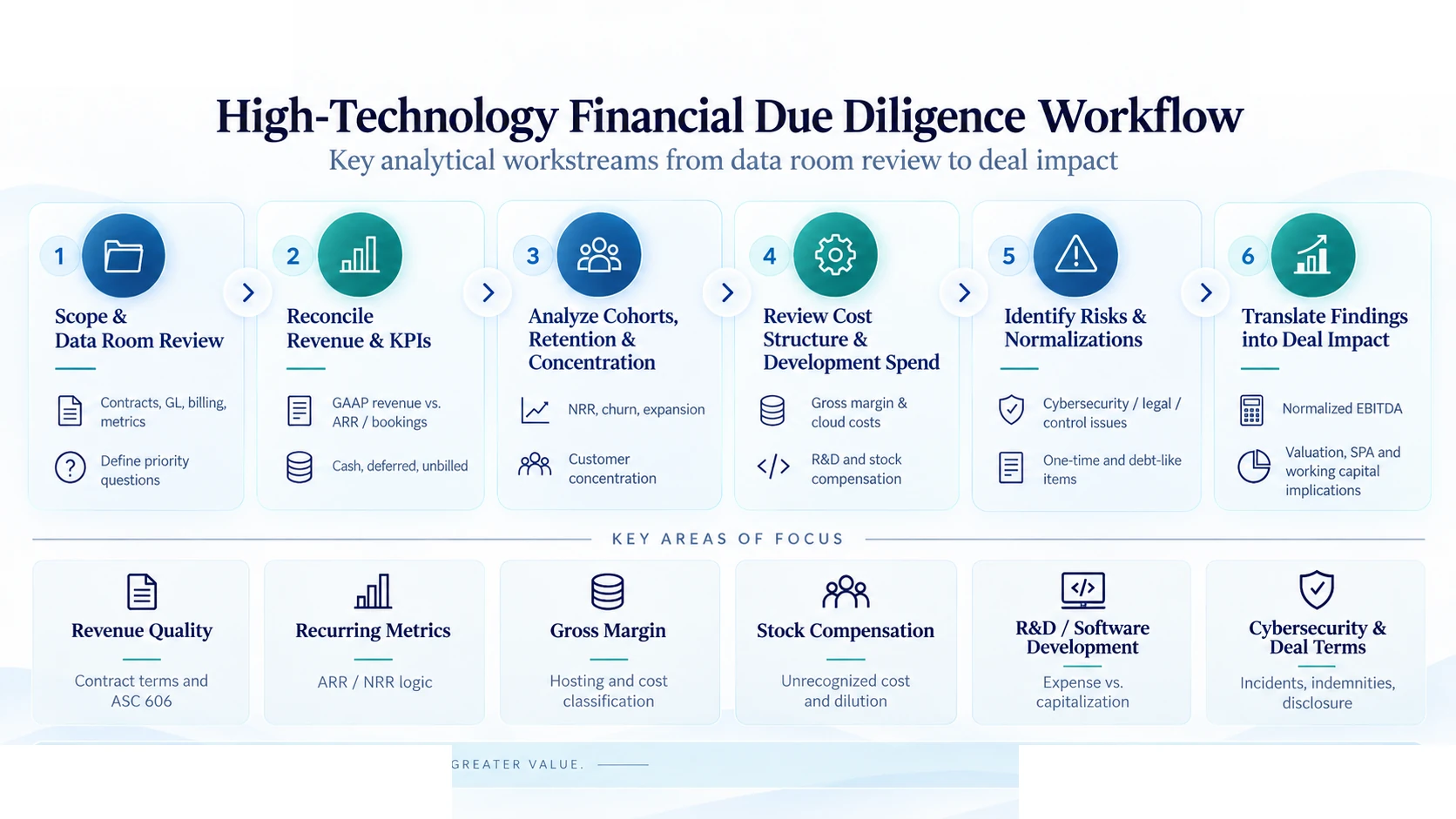
Figure 2. High-tech financial due diligence workflow
A deal-oriented diligence flow connecting source-data collection, metric reconciliation, normalization, risk assessment, quality-of-earnings analysis, and transaction implications.
7. Data integrity is itself a diligence finding
A sophisticated dashboard is not evidence that the underlying data is reliable. If management cannot reproduce ARR, NRR, churn, bookings, pipeline or cohort metrics from controlled source data, that weakness should affect the confidence placed on the growth story. Diligence should document the metric definition, source systems, transformation logic, manual overrides, ownership and reconciliation controls.
8. Turning findings into transaction consequences
The best diligence report connects accounting and operating findings to deal mechanics. Revenue cut-off issues may affect normalized EBITDA and working capital. Customer concentration may affect valuation or earn-out design. Unrecognized stock-compensation cost may alter future expense. Cloud commitments and litigation may be debt-like or require specific indemnities. Weak metric governance may justify a lower confidence level in forecasts even if no GAAP adjustment is identified.
Technical references
Revenue recognition principles and contract accounting.
SEC Non-GAAP C&DIsSEC staff interpretations relevant to adjusted metrics and prominence.
SEC Cybersecurity RuleIncident and governance disclosures for public companies.
FASB CodificationAuthoritative U.S. GAAP reference for Topics 718, 730, 805 and 350-40.
Important note
This publication is for general informational purposes only and does not constitute accounting, legal, tax, audit, investment, valuation, transaction, or other professional advice. The appropriate analysis depends on the specific facts and circumstances and on authoritative guidance in effect at the relevant date.
Turn insight into action
Complex finance, control, transaction, and technology questions benefit from structured analysis, disciplined data, and clear ownership.
Contact Insight Bridge